




The secret to increased engagement within successful apps

The Role of Smart Personalization in Increasing In-App Engagement
Personalization is no longer an added feature but a fundamental element in the success of any app seeking to increase engagement. It relies on analyzing user data and delivering content that aligns with their interests and behavior within the app. When users find that the app offers products, services, or content that match their desires, they feel genuine value that motivates them to continue and interact more. Personalization can also extend to the user interface itself, such as arranging sections or displaying frequently used shortcuts, saving time and increasing user convenience. Furthermore, personalized notifications play a significant role in re-engaging users, provided they are intelligent and unobtrusive, delivered at the right time and with the appropriate content. This transforms the app from a mere tool into a distinctive, personalized experience. This is what distinguishes successful apps that understand each user has different needs that must be met in a precise and thoughtful manner.
Why Simplicity Is the Key to Increased Engagement
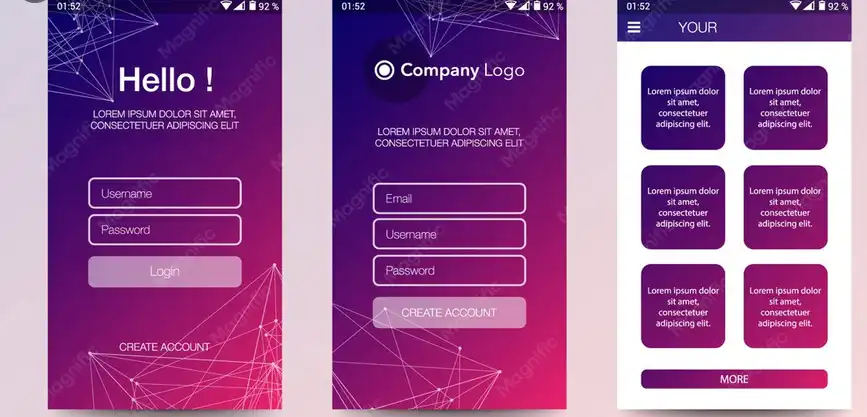
Despite significant technological advancements, simplicity remains the most important factor in attracting users and motivating them to interact within applications. A complex application with numerous disorganized options can confuse users and cause them to abandon it quickly. Conversely, a simple application that offers a clear and easy experience makes users feel comfortable and confident, as they can quickly access what they need without overthinking. Simplicity doesn't mean reducing features; rather, it means presenting them in an organized and easy-to-understand manner. Furthermore, using a clean design, clear fonts, and harmonious colors enhances the user experience. Therefore, successful applications rely on the principle of "don't make the user think too much"—make everything clear and straightforward. This leads to a significant increase in engagement and longer usage periods.

How does app speed affect user behavior and interaction?
App speed is not just a technical factor; it's a psychological element that directly impacts user behavior. Any delay in page loading or command execution can lead to frustration, causing users to abandon the app. Conversely, a fast app enhances user satisfaction and encourages them to explore more features. Speed also contributes to reducing bounce rates and increasing the number of actions users perform within the app. Furthermore, it affects app store ratings, which in turn impacts download numbers. Therefore, investing in improving the app's technical performance is essential for increasing engagement. This involves reducing data usage, improving server responsiveness, and utilizing caching technologies. All of these measures aim to provide a seamless experience that makes users feel the app is working instantly without any waiting.

The Power of Smart Notifications in Bringing Users Back to the App
Notifications play a pivotal role in maintaining user engagement within an app, but their indiscriminate use can be counterproductive. Therefore, notifications should be smart and based on user behavior and interests, sent at the right time with content that is genuinely relevant to the user. They can also be used to remind users of offers or activities that may be relevant to them, and they can be customized to suit each user individually. It is also important not to overdo it with notifications so as not to annoy the user. Balance is key in this regard, as well-thought-out notifications can significantly increase the return rate to the app and foster continuous engagement.