



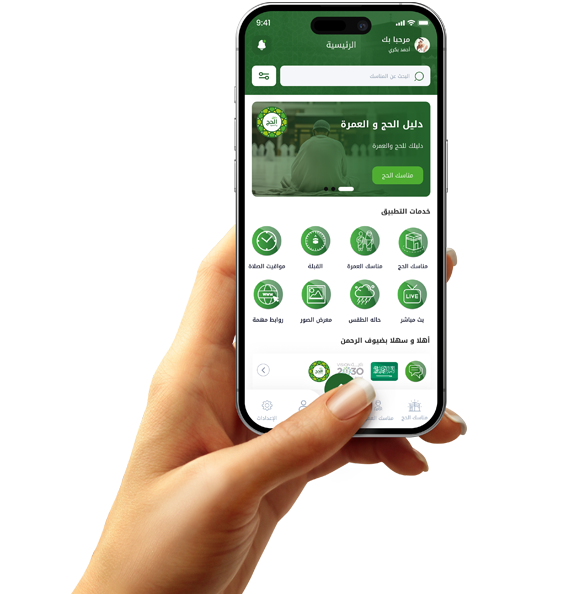



The flexible application helps to multiply business opportunities.
Flexible Applications Keep Pace with Market Changes
In today's fast-paced world of applications, success is no longer solely dependent on the idea itself, but also on the application's ability to adapt to continuous changes. Customer needs are constantly evolving, and an application lacking sufficient flexibility can quickly lose its position to competitors. A flexible application, on the other hand, can add new features, modify its services, and enhance the user experience at any time without significant complications. This gives the project the opportunity to capitalize on emerging trends before others. Furthermore, flexibility facilitates experimentation with different business ideas and testing diverse services to determine what achieves the best possible results, increasing the likelihood of success and profitability. In addition, flexible applications are more attractive to investors and business partners because they demonstrate a clear readiness for future growth and expansion into multiple areas.

App flexibility increases revenue stream diversity.
A flexible app allows business owners to leverage multiple revenue streams simultaneously. The ease of adding new services and features enables the app to expand into various areas such as advertising, subscriptions, commissions, digital sales, and other modern revenue methods. This flexibility also allows for experimentation with multiple business ideas without needing to create a new app for each service, reducing costs and increasing the chances of success. Furthermore, flexible apps can adapt to diverse customer needs and offer varied solutions to suit multiple user segments. This expands the target audience and significantly increases the app's market value. Over time, the app transforms into a comprehensive platform generating increasing revenue from multiple channels.

Flexible applications facilitate entry into new markets.
When an application has a flexible structure, it becomes easy to modify services, redesign the interface, or add different languages and payment methods to suit new markets. This gives the project the opportunity to expand beyond its current scope and reach a larger number of customers. Entering new markets always requires the ability to adapt to different user requirements, and a flexible application can implement these changes quickly and efficiently without disrupting service or affecting performance. This type of application also allows companies to capitalize on global trends and rapid changes in the world of digital commerce. Thus, flexibility becomes a fundamental element in building a project capable of growth and wider expansion.
Flexible Applications Empower Businesses to Innovate
Every successful project needs space for experimentation and continuous development. Flexible applications provide this space because they allow for the addition of new ideas and the testing of different services without requiring radical changes to the core system. This encourages companies to innovate and offer unconventional solutions that increase the application's market appeal. Flexibility also facilitates the rapid launch of new campaigns, offers, and experiments, enabling the project to capitalize on business opportunities at the right time. Furthermore, flexible applications can keep pace with modern technological advancements such as artificial intelligence, electronic payments, and smart service customization, making them more competitive and profitable.
One of the biggest mistakes some projects make is building a rigid application that is difficult to modify or develop later. This makes any update or new addition costly and complex. Flexible applications significantly reduce these problems because they are designed to easily accommodate future changes. This saves the company considerable time and costs. Flexibility also gives the project a faster chance to respond to market changes and customer demands, reducing the likelihood of failure or user loss. Additionally, flexible applications are more sustainable and capable of growth because they don't stop at a single idea but have the continuous potential to expand, develop, and generate greater business opportunities over time.