




Designing iOS and Android Mobile Apps in Egypt: Everything You Need to Know

Your Guide to Developing a Successful Android and iPhone App for the Egyptian Market
When considering the development of an Android or iPhone app in Egypt, you should view the project as a comprehensive digital product that requires careful research, design, programming, testing, and ongoing operation. Focusing solely on the app’s visual appearance may result in an attractive interface that lacks a functional user experience capable of achieving your business objectives.
The process begins by identifying the target audience, understanding their needs, and determining the contexts in which they will use the service. This ensures that the app’s features are designed based on actual user behavior rather than untested assumptions.
Next, the concept is translated into a clear list of essential features for the initial version—distinguishing them from features that can be added post-launch—to minimize complexity and accelerate the time to market.
How do you choose a mobile app design company in Egypt for an Android and iOS project?
Selecting an app design company in Egypt is a decision that significantly impacts the quality of your project, its development timeline, and its future scalability. Therefore, your choice should not be based solely on price or the visual appeal of previous work; rather, it should depend on how the company manages the project—from the initial concept through to launch and ongoing support.
Start by explaining your app idea and the business objectives you aim to achieve. Observe whether the company asks questions about your target users, operational workflows, and core features, or if they simply jump straight to providing a price quote without fully understanding the details.
The right partner will help you transform a general concept into a clear scope of work, defining the screens, functionalities, integrations, the control panel, and the various user roles within the system.
It is also important to understand the technology the company proposes for your Android and iOS development, and why it is specifically suited to your project—as opposed to a "one-size-fits-all" approach that applies the same technology to every project regardless of its unique requirements.
Furthermore, you should discuss their approach to user experience (UX) design, ensuring there is a dedicated phase for mapping user journeys and creating prototypes before final programming begins.

The Cost of Designing iOS and Android Apps in Egypt: Why Does It Vary from Project to Project?
When researching the cost of mobile app design in Egypt, you may encounter significant differences between quotes from various companies. This is because an app is not a static product with a price determined solely by the number of screens; rather, it is a complex system whose cost varies based on its functionality, design, backend architecture, integrations, and overall level of complexity.
A simple app that displays static information or services differs vastly from an e-commerce platform—which requires features like product listings, a shopping cart, order management, payment processing, inventory tracking, discount coupons, shipping, notifications, and a comprehensive administrative dashboard.
Similarly, a booking application—which must manage appointments, multiple locations, staff, and real-time availability—requires a different programming logic than an app that merely displays a list of services.
The number of user roles also influences the cost; for instance, an app that caters to customers, merchants, delivery agents, and administrators requires the development of distinct access permissions, user journeys, and interfaces for each group.
Furthermore, the quality and depth of the user experience (UX) design—including custom-tailored layouts—increase the workload, unlike simpler interfaces that do not require extensive research into user behavior.
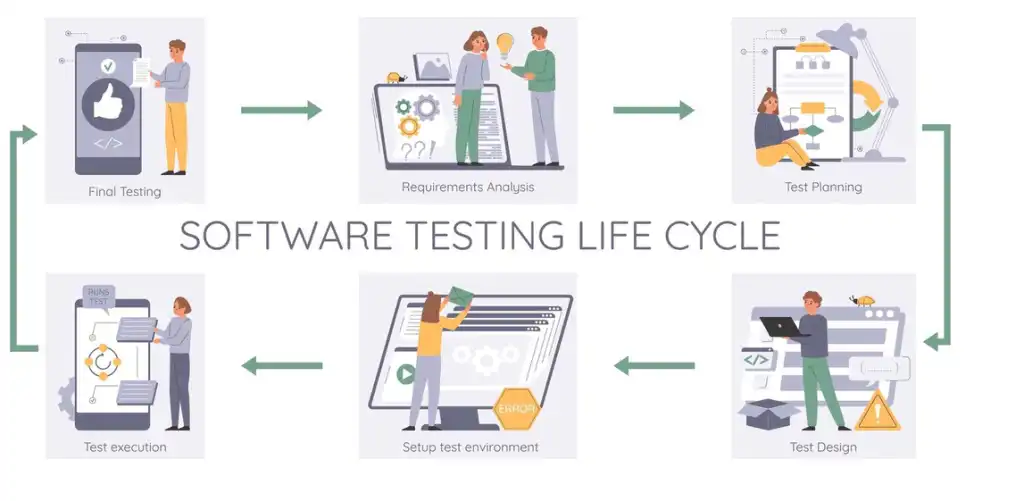
Stages of Designing and Programming a Professional Mobile Application: From Concept to Launch
Transforming an app concept into a project that runs on both Android and iOS involves several interconnected stages. Each stage helps minimize errors in the subsequent one; therefore, skipping the planning phase to jump straight into programming can lead to costly changes—changes that could have been identified before significant portions of the system were built.
The process begins with gathering requirements, understanding the business, identifying the target audience, defining the app’s primary objective, and pinpointing the specific problem it aims to solve.
Next, user personas are defined, along with the specific features required for each group. Functions are then prioritized to distinguish between the requirements for the initial version and ideas reserved for future updates.
User flows are then mapped out to illustrate the steps a user takes—such as registering, placing an order, making a reservation, processing a payment, or executing the app’s core functions.
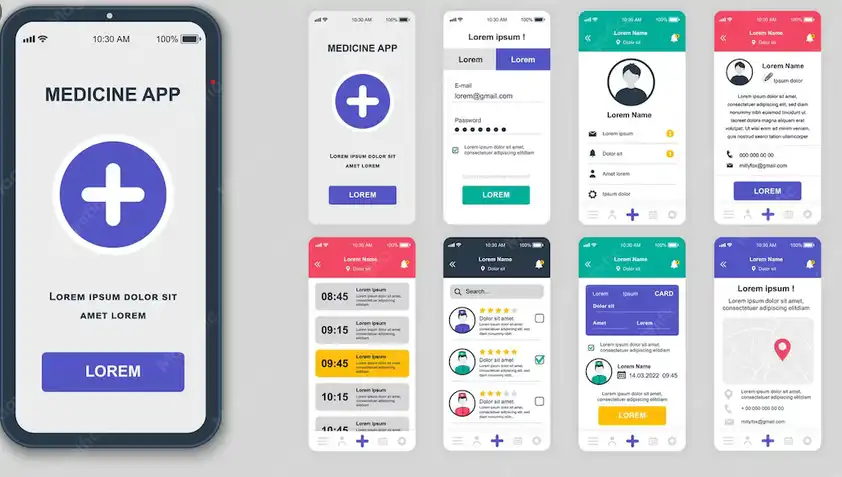
Prototyping helps visualize the page structure and test the concept before investing substantial time into visual design and final programming.
Once the structure is approved, the user interface (UI) design phase begins, where the visual identity—including colors, typography, buttons, and the layout of data and content—is established.
This is followed by the actual programming of the application, which includes developing the backend system, database, administrative dashboard, and any necessary third-party integrations.
It is essential to break the implementation into reviewable phases, rather than waiting until the entire project is complete only to discover that certain functions do not perform as expected.
Subsequently, functional testing is conducted to ensure that features like registration, ordering, payments, and notifications work correctly under both normal and unexpected conditions.
Additionally, the user experience (UX), system performance, response speed, and display consistency across various device screen sizes are tested before arriving at the final version ready for launch.