







Application security and data protection are among the most important factors for its stability and continued efficient operation.

Data Encryption Enhances Customer Trust in the Application
Data encryption is one of the most important methods for reducing the risk of unauthorized access to sensitive information. Data handled within applications may include usernames, phone numbers, email addresses, account information, order details, and potentially financial or personal information requiring a high level of protection. Therefore, sensitive data must be protected during its transmission between the application and servers, as well as during storage, according to appropriate security protocols. A strong encryption system does not mean the application is immune to all risks, but it represents a crucial layer within a multi-layered defense system. When users feel that the application handles their information with care and transparency, they are more willing to use it continuously, enter their data, and complete transactions through it. Conversely, any major data breach can directly impact customer trust and make reputation recovery difficult. Therefore, encryption should not be merely a technical term used for marketing purposes, but rather an integral part of the application's architecture and data and communication management methods. Appropriate protection mechanisms should be selected based on the nature of the project and its operating environment, as data protection is now directly linked to project continuity and customer retention.

A secure login system protects user accounts.
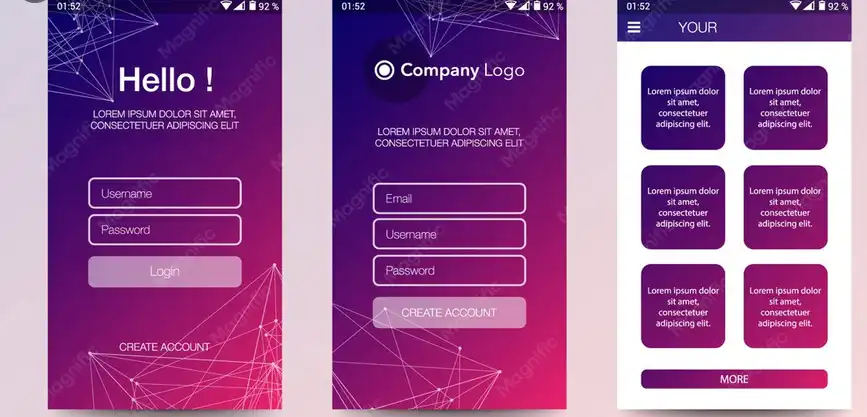
Loginning is one of the most important entry points to an application, so designing it securely is essential for protecting accounts and the data within them. The more an application relies on sensitive information, financial transactions, or personal data, the more crucial it becomes to handle the authentication process with the utmost care. A secure login system can include strong passwords, additional verification mechanisms, proper session management, and alerts for unusual activity, tailored to the application's needs. Login data should not be handled in a way that exposes it to risk within the application or on servers, as compromising a single account can, in some systems, lead to access to information or services associated with that account. Therefore, the authentication system should be designed to consider both normal and abnormal scenarios that might occur during use. Repeated and incorrect login attempts should be tested, and expired sessions and different devices should be handled appropriately. When users feel their account is protected and that the application prioritizes the security of the login process, they gain greater trust in the service. This makes login security not just a technical procedure, but a factor that impacts the user experience, the application's reputation, and its sustainability.

Continuously updating your app reduces accumulated security risks.
Launching an app doesn't mean the security phase is over. Apps rely on operating systems, libraries, servers, and external services that are constantly changing. Over time, new vulnerabilities or different attack methods may emerge, requiring ongoing remediation. Therefore, regularly updating your app is a crucial part of a long-term security strategy. An app left unchecked for extended periods can accumulate problems that are difficult to detect or fix later. Regular updates improve the code, fix bugs, enhance compatibility with new operating system versions, and update the app's components. Continuous development also allows for the addition of new security measures as market needs evolve. A clear plan should be in place after launch, encompassing review, updates, testing, and follow-up, rather than simply waiting for a problem to arise before addressing it. Digital security is an ongoing process, not a project that ends once the app is uploaded to the app store. Every appropriate security update can be an additional step in maintaining app stability and reducing the chances of user data being compromised.

Secure backups protect your application from data loss.
Any technical system can be subject to malfunctions, human error, server problems, or unexpected data loss. Therefore, having organized and secure backups is one of the most important elements of application continuity. Backups don't directly protect against hacking, but they mitigate the impact of some incidents and help restore data and service when a problem occurs. A backup strategy should be designed according to the nature, size, and importance of the data, with particular attention to protecting the backups themselves from unauthorized access. An unprotected backup can transfer the problem from the original database to another copy containing the same information. Data recovery capabilities should also be tested periodically to ensure that existing backups are not merely stored files without any actual usability when needed. This is especially important for applications that companies rely on for order processing, customer management, or daily operations. Prolonged data loss can disrupt operations and damage user trust. Therefore, backups are an integral part of a business continuity plan, not just a minor technical procedure.