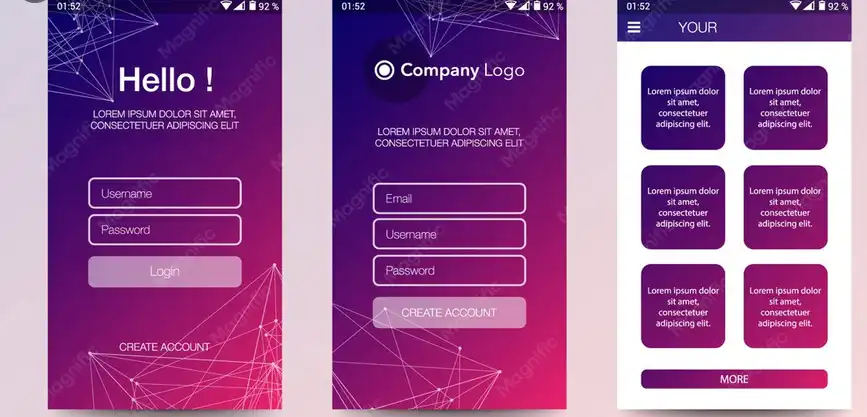









Software quality in applications reduces hidden expenses.

Clean Code Reduces Costly Maintenance Hours
When an application is built with haphazard and disorganized code, even a small modification can require hours of testing and experimentation for fear of breaking other system components. This leads to increased maintenance costs without the project owner realizing where the budget went. Clean and clear code, on the other hand, allows developers to quickly understand the architecture and implement updates efficiently, reducing paid work hours and shortening development time. It also minimizes the need for senior developers to intervene in minor tasks that could be easily resolved. Therefore, code quality reduces one of the most dangerous hidden expenses: wasted technical time, which directly translates into ongoing financial costs.
A simple application error may seem minor, but its recurrence can cause multiple losses, such as canceled orders, angry customers, compensation, additional customer service, and trust-building campaigns. All of these are hidden expenses not included in the original programming cost. A well-tested application built on a solid foundation reduces the likelihood of such errors from the outset and prevents small technical glitches from turning into large, accumulating bills over time. Therefore, code quality saves money not only by preventing malfunctions but also by preventing costly side effects.

A robust infrastructure reduces future scaling costs.
When an application succeeds and its user base grows, the need for scaling arises. If the software infrastructure is weak, growth becomes very costly because the company has to rebuild many components or migrate systems under time pressure. In contrast, a high-quality application designed from the outset is ready to gradually expand, reducing the cost of adding servers, features, and connecting to new services. Therefore, software quality not only solves current problems but also prevents huge future expenses that appear at the first sign of success.
Companies spend significant sums to acquire users, but if a customer visits a slow or malfunctioning application, they leave quickly, wasting the marketing budget with no real return. A fast and stable application, on the other hand, converts visits into actual users and purchases, meaning every pound spent on marketing works more efficiently. This is why software quality is directly linked to reducing hidden marketing expenses caused by a poor user experience.

Early testing is cheaper than late fixes.
Fixing a bug during development is far less expensive than discovering it after the application reaches customers. A late bug requires immediate analysis and updates, and may even necessitate apologies, compensation, and additional support. Early software testing, on the other hand, uncovers problems in a safe environment before they escalate into operational crises. Therefore, investing in quality during development saves significant hidden expenses after launch.
Weak applications constantly require quick patches and temporary fixes to keep the system running. These fixes consume developers' time, increase system complexity, and create new problems. In contrast, high-quality software provides a solid foundation, reducing the need for daily fixes that may seem minor but can drain the long-term budget.

Small errors within an application can open the door to huge expenses.
A simple error in the user interface, payment page, or login may seem minor, but these small glitches often escalate into a long chain of unexpected costs. A project might lose a completed sale, the support team might have to respond to dozens of customers, some users might request refunds, compensation, or additional discounts, and the company might have to launch a new campaign to regain trust. All of this started with a technical error that could have been prevented with proper testing and high-quality software. Therefore, an excellent application not only saves money through optimal performance but also by preventing this chain of collateral losses, which are sometimes difficult to calculate precisely. The higher the quality of the software, the lower the likelihood of small errors turning into costly operational crises that silently drain the budget.
When an application starts attracting a large number of customers, the importance of true quality becomes apparent, because weak systems collapse under pressure and require urgent restructuring or costly changes to servers, databases, and operating paths. In contrast, an application built on a strong architecture can accommodate incremental growth more efficiently, saving the company the costs of rebuilding under time pressure. It also allows for the addition of new services or new markets without disrupting the entire project. Quality here not only prevents the problem but also provides important financial flexibility, because expanding on a weak system is often much more expensive than building a strong system from the beginning. Therefore, software quality reduces one of the most dangerous hidden expenses, which is the cost of success for which one is not prepared.