


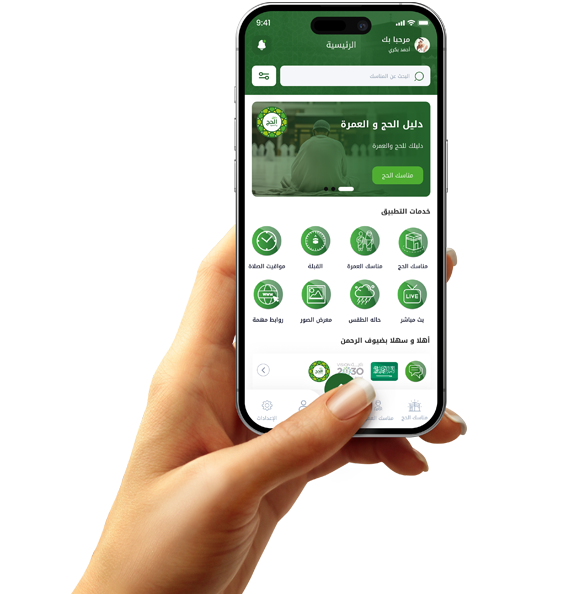




Every language you add to your app is a new market you gain.

When your app speaks the customer's language, sales opportunities increase.
Language is the hidden factor that profoundly influences user decisions within an app, far more so than many business owners realize. When users read product or service details in their own language, they grasp the value more quickly and feel a greater sense of security and confidence, prompting them to complete the purchase without hesitation or fear of misunderstanding. Therefore, every language you add to your app means you're removing a psychological barrier that previously prevented an entire segment of the population from engaging with your services. An app that supports only one language limits its geographical scope, while a multilingual app opens up vast horizons of new markets seeking digital solutions in their own language. Furthermore, supporting multiple languages gives you a strong competitive advantage in digital marketplaces, where users prefer apps that provide a clear and seamless experience without the need for external translation or guesswork. As you expand your language support, you begin to discover diverse purchasing behaviors and usage patterns, allowing you to refine your marketing strategy and tailor offers to each market. This diversity not only increases the number of users but also raises the average revenue per user because the experience becomes closer to their expectations and more aligned with their culture. Hence, linguistic expansion becomes one of the key strategies for increasing sales. It is one of the most important tools for increasing profits, both directly and indirectly, because it transforms your application from a local project into a platform capable of competing in multiple environments with confidence and stability.

From a Single Market to a Global Map Through Multilingualism
When you limit your application to a single language, you create invisible boundaries around your project and restrict its reach to a narrow geographical area, regardless of the quality of your services or the strength of your idea. However, the moment you decide to add a new language, you're not simply making a minor adjustment to the settings; you're completely redrawing your reach. Each language represents a country, several countries, or even an entire continent of potential users seeking digital solutions they can easily understand and interact with confidently. An application that addresses the user in their own language makes them feel respected and valued, reinforcing the feeling that the service was designed specifically for them, not just a generic version aimed at everyone without distinction. With each new language, you begin to penetrate different markets with diverse purchasing behaviors and unique usage patterns, allowing you to expand your marketing strategies and increase your revenue streams. This linguistic expansion also reduces your dependence on a single market and gives your project greater stability in the face of economic or seasonal fluctuations. Therefore, multilingualism is not just an added advantage; it's a strategic expansion plan that transforms your application from a local project with limited impact into a global platform capable of confidently and consistently competing in multiple environments.

When your app supports multiple languages, your brand's impact grows.
Major brands haven't achieved global reach simply because they have a good product, but because they've been able to connect with diverse audiences in their own languages and cultures, making them an integral part of their daily lives. When your app supports multiple languages, it's following the same path, sending a clear message that your project isn't limited to a specific demographic but aims to reach a broad and diverse audience. Each language you add strengthens your presence in a new market and builds trust with users who feel understood and respected. This linguistic diversity also gives you the flexibility to launch targeted marketing campaigns for each geographic region, increasing ad effectiveness and engagement rates. Over time, your app transforms from a digital product into a global platform capable of adapting to different environments without losing its core identity. Therefore, each new language not only adds new users but also strengthens your brand's reach, expands its presence, and enhances its intrinsic value, making it more firmly established in the competitive app market.

Multilingualism is the fastest way to break down geographical barriers.
In a digital world where geographical boundaries are no longer a technical obstacle, but rather language has become the real barrier between a local, limited-reach project and a global platform capable of reaching millions of users, the decision to add a new language to your application becomes a way to break down this barrier and open a direct window into a market you weren't previously part of. Users naturally tend to interact with applications that address them in their own language, understand their expressions, and present information in a familiar way that doesn't require additional mental effort. As you expand support for multiple languages, you remove another layer of psychological and communicative barriers that separated you from a potential audience. Over time, you'll begin to notice that each new language not only brings additional downloads but also a new culture and different consumer behavior, opening up broader marketing opportunities and more diverse growth strategies. This makes multilingualism not just a user experience enhancement option but a genuine expansion strategy that redefines the boundaries of your project and gives it a much wider global horizon than it had at its inception.