




How the choice of an app name affects its memorability and discoverability
Why might a good app fail to gain traction simply because its name is hard to remember?
A project might feature a professional design, robust functionality, and a concept that is in high demand, yet still struggle to gain traction if its name is overly complex or unclear to users.
Users encounter dozens of names and brands every day; consequently, a name that requires significant mental effort to memorize is likely to fade from their memory quickly.
When a user hears about an app—whether through an advertisement, a video, or a friend’s recommendation—and decides to look it up later, their ability to recall the name becomes the deciding factor in whether they can actually find it.
If a name uses an unusual spelling or an unpredictable sequence of letters, a user might try several different variations without ever successfully locating the intended app.
After a few failed attempts, the user may give up the search entirely—or, worse, end up downloading a competitor’s app that appears in their search results and offers a similar service.
For this reason, it is essential to consider the name from the perspective of a new user—someone unfamiliar with the brand—rather than solely from the viewpoint of the project owner, who sees the name every single day.
A useful test is to say the name aloud to people who have never encountered it before, then ask them to write it down; this reveals how easily they can translate what they hear into the correct spelling.
You can also test how well people remember the name after a short period, which helps determine whether it leaves a lasting impression or quickly slips from their memory.
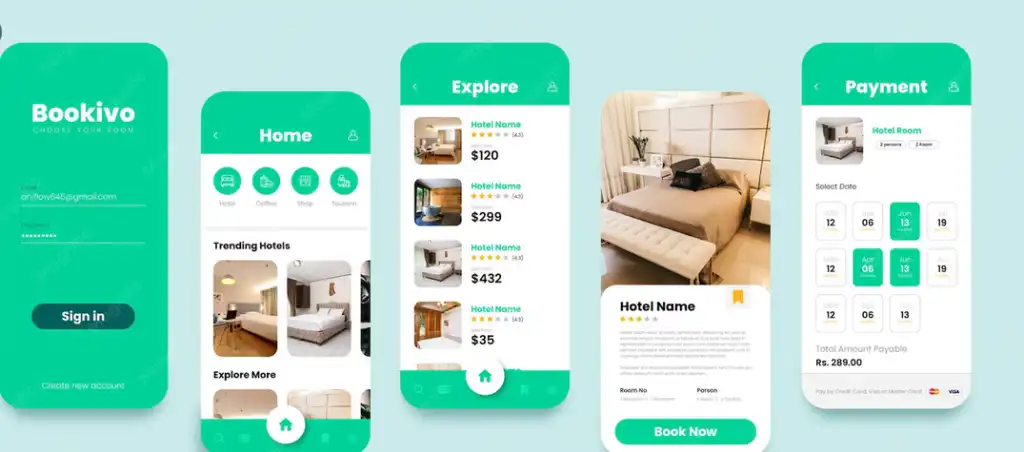
The ease of typing an app’s name can be more important than you might expect when it comes to searching within app stores.
When brainstorming a name for an app, some entrepreneurs focus primarily on visual appeal, often overlooking a crucial question: how easy is it for a user to type the name when searching for it?
A user might discover an app through an advertisement outside the app store, then head to the store and attempt to type the name based solely on their memory—without having a direct link.
At this point, the simplicity of the spelling becomes a practical factor that determines how easily a user can reach the correct page, without confusion or the need for multiple attempts.
A name that can be spelled in various ways poses an even greater challenge when a brand is new and has not yet reached a level of recognition that allows search engines to easily interpret or correct potential typos.
This issue becomes particularly pronounced when a foreign name is used for an audience accustomed to searching in Arabic, or when the pronunciation of a name differs from its spelling.
Therefore, it is beneficial to study the language your target audience uses for searches, rather than choosing a name based solely on its aesthetic appearance.
It is also worth considering the additional terms a customer might type alongside your brand name—such as the type of service or product they are looking for—in cases where they cannot recall the full name.
How does a distinctive name help transform an app into a brand that users remember?
An app aiming for long-term market presence needs more than just a name that describes its service; it requires an identity that users can recognize and recall whenever they need that service again.
A distinctive name provides a central anchor around which the entire brand—including its design, logo, advertisements, marketing content, and digital presence—can be built.
As the name appears repeatedly to the user across various touchpoints, a mental association gradually forms between the term and the service, to the point where simply seeing the name is enough to bring the app’s concept to mind.
However, reaching this stage becomes more challenging if a name is too generic—potentially applying to dozens of other apps or companies operating in the same sector.
While generic names might help users quickly grasp the nature of a service, they can hinder the development of a unique brand identity, as they lack a clear, distinguishing element.
Conversely, a highly cryptic or abstract name might be unique, but it would likely require a larger marketing budget to help the audience understand what the brand actually represents.
Why should an app name be tested with users before it is finalized?
An app name might seem excellent to the project owner and the team, as they are familiar with the concept, the service, and the background behind its selection. A new user, however, encounters the name without any of this context.
Testing the name with a small group of people who resemble the target audience can reveal issues that were not apparent during internal brainstorming sessions.
Testing can begin by asking individuals what they expect the app to be upon hearing the name, helping to determine whether the impressions it evokes align with the nature of the project.
Additionally, the name can be spoken aloud—without showing it in writing—to see if the pronunciation naturally leads to the correct spelling or if it results in significant variations.
It is also useful to present a list of names briefly, then—after some time has passed—ask participants which ones they still recall, without providing any prompts.
This simple experiment might reveal that the name the team finds most creative is not necessarily the one that sticks in a user’s memory.
Furthermore, one should search for the name in app stores and on search engines to see what results already exist and whether there are many other brands or apps with similar names.
High similarity to an existing name can confuse users, potentially causing marketing campaigns to inadvertently drive traffic toward a competitor rather than the intended project.
Finally, the name should be tested as it appears in a smaller format alongside the app icon; the actual user experience differs significantly from viewing the name in a large, prominent display within a brand identity presentation.