








How documenting software requirements helps prevent misunderstandings of the project concept.

Why do written requirements protect your project from mismatched expectations with the software development company?
A project owner might explain their idea to the development company in a way they believe is sufficient, yet the team may interpret certain details quite differently because the functionality of features and potential scenarios were not explicitly documented.
Documenting requirements ensures that every desired application function is clearly defined and open to review; this allows both the client and the technical team to understand exactly what will be implemented before significant amounts of code are written.
For instance, it is insufficient for a client to simply state they want a booking system without specifying how appointments are selected, the mechanisms for confirmation, cancellation, and rescheduling, and the notifications associated with each status.
Any undocumented detail can later become a point of contention, as the client might view it as an inherent part of the feature, whereas the implementation team may not have included it in their vision.
Consequently, documenting various scenarios helps reveal the gap between client expectations and the team's understanding before that gap translates into costly post-development modifications.
Such documentation also provides the designer with precise information, enabling them to create interfaces that align with actual workflows rather than simply designing visually appealing screens that fail to meet all functional needs.
Finally, programmers benefit from understanding the relationships between data, services, and users, allowing them to build a system that accommodates the required functions without relying on "quick fixes" that are difficult to develop further down the line.

How a requirements document prevents the app's implementation from deviating from your vision
A common issue in app projects arises when the core idea is sound and clear to the owner, yet the final product fails to reflect the specific details and functionalities expected during actual use.
This often happens when the idea is conveyed from the client to the development team through a general overview, lacking a detailed document that outlines functions, user journeys, and the various states of each process.
Documenting requirements provides a clear description of the project owner's expectations and allows the development team to grasp the details before making the technical decisions that will shape subsequent stages.
For instance, if the app supports different account types, it is essential to define what each type sees, what they can edit, and what data they can access—rather than leaving these decisions until the implementation phase.
Similarly, if the app involves requests or bookings, the document must clarify the various states a request goes through, who is responsible for changing those states, and what the user sees when such changes occur.
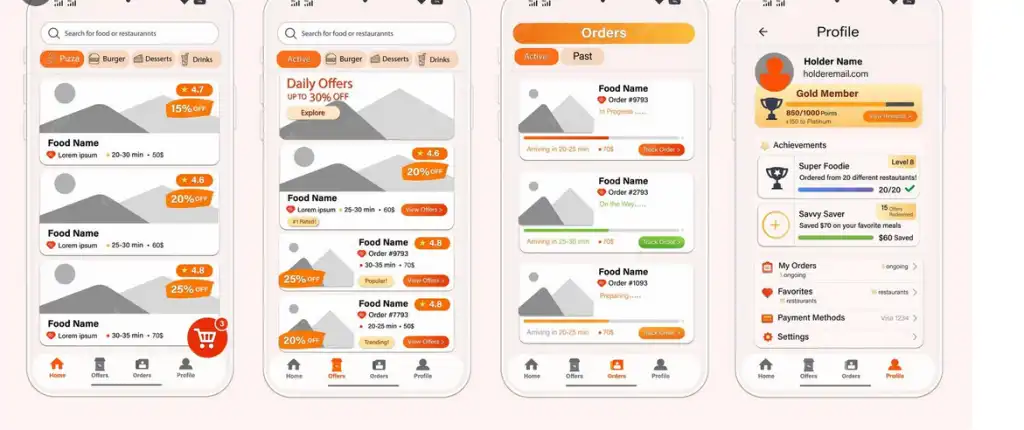
Clear requirements minimize unexpected modifications during application development.
Frequent changes during the implementation phase do not always stem from the project owner altering their concept; often, they result from a failure to sufficiently discuss key details prior to the design and programming stages.
When requirements are brief or vague, the development team is forced to make numerous decisions during implementation to proceed with building the necessary screens and functionalities.
These decisions may diverge from the client's expectations, as the client might not have realized that certain details required prior definition—viewing them instead as self-evident aspects of the concept.
Documenting requirements shifts these details from the realm of assumptions to that of discussion and consensus, ensuring that critical decisions are established before significant time is invested in implementation.
During the documentation process, each feature can be analyzed alongside its associated scenarios—examining what occurs before, during, and after the process, as well as how the system behaves in exceptional cases.
This analysis reveals requirements that might otherwise go unnoticed with only a brief description—such as the need for specific notifications, additional user permissions, new order statuses, or procedures for handling process failures.
It also helps identify the data required from the user and determine its necessity for the service, preventing the creation of registration or data-entry forms that do not align with the application's nature.

How does requirements documentation create a common language among the client, designer, and programmer?
An application project typically involves individuals with diverse backgrounds: the project owner focuses on the service and customers; the designer prioritizes the user experience; and the programmer concentrates on translating required functions into an efficient technical system. While these differing perspectives can benefit the project, they may also lead to misunderstandings if each party uses different terminology or concepts to describe the same feature without a unified reference point.
Requirements documentation serves as a common language that bridges the business vision, the user-facing interface, and the underlying programming logic.
Instead of simply stating that the application requires a membership system, the documentation specifies membership tiers, the distinctions between them, the features available for each tier, and the processes for upgrading, renewing, and cancelling memberships.
This detailed description helps the designer identify the necessary screens and assists the programmer in defining the logic, while allowing the client to verify that the operational workflow aligns with their business model.
Documentation also minimizes the risks associated with verbal information transfer across the team, as undocumented exchanges can lead to the unintentional omission of details or the alteration of their intended meaning.
Furthermore, when a new member joins the project team, they can consult the documentation to understand the fundamental structure, rather than relying solely on a quick explanation from a colleague who might focus on one aspect while overlooking others.
Meetings become more productive as discussions can focus on specific points requiring decisions, rather than repeatedly re-explaining the entire project concept. Decisions resulting from meetings can also be recorded within the requirements, ensuring everyone knows what changed, why it changed, and which parts require updates as a result.
This is particularly beneficial when the application integrates with a dashboard, a website, or external services, as each party needs to understand how data flows between these systems.
Using clear language also helps minimize technical jargon that might otherwise lead a client to agree to something without fully grasping its impact on the application's usability.
The goal of the document is not to detail complex programming specifics, but rather to describe the system's required behavior in a way that all parties can understand and review.
Once the parties agree on this behavior, selecting a technical solution becomes a clearer responsibility, and the final outcome can be evaluated based on required functions rather than subjective impressions.
This approach reduces conflicts, accelerates decision-making, and improves coordination across the stages of project analysis, interface design, programming, testing, and delivery.
Consequently, requirements documentation becomes an essential communication tool that maintains a unified project vision, regardless of the diverse specializations of the individuals involved in transforming the idea into a functional application.